Buy entspannen.eu ?
We are moving the project
entspannen.eu .
Are you interested in purchasing the domain
entspannen.eu ?
domain@kv-gmbh.de · 0541-91531010
Buy entspannen.eu ?
Why are demonstrative pronouns called demonstrative pronouns?
Demonstrative pronouns are called demonstrative because they demonstrate or point to a specific noun or pronoun in a sentence. They help to indicate the position or location of the noun or pronoun in relation to the speaker or listener. By using demonstrative pronouns such as "this," "that," "these," and "those," speakers can make their communication more precise and clear by specifying which person, place, thing, or idea they are referring to. **
What is the difference between demonstrative pronouns and demonstrative determiners in French?
In French, demonstrative pronouns (ce, cette, ces) stand alone to replace a noun, while demonstrative determiners (ce/cet, cette, ces) are used with a noun to indicate which specific thing or person is being referred to. For example, "Ce livre est intéressant" uses the demonstrative determiner "ce" with the noun "livre," while "Celui-ci est intéressant" uses the demonstrative pronoun "celui-ci" to replace the noun "livre." Demonstrative determiners are used before a noun, while demonstrative pronouns are used in place of a noun. **


Similar search terms for Demonstrative
Top-Angebote
Products related to Demonstrative:
-
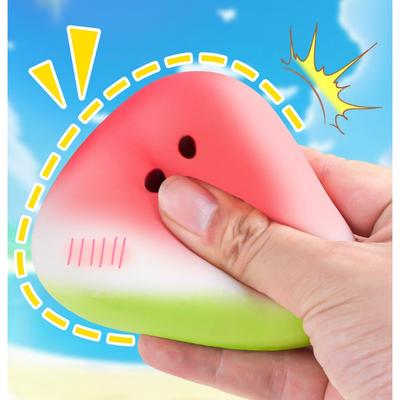
DynamicDeals Watermelon Slow Rising Squishy Stress Relief Toy For Anxiety, Focus & Sensory Relaxation Watermelon Slow Rising Squishy Stress Relief Toy For Anxiety, Focus & Sensory RelaxationTurn stressful moments into satisfying squeezes with this slow rising squishy designed to help you relax, refocus, and unwind. Shaped like a cheerful watermelon slice, this soft sensory toy delivers a calming squeezeandrelease experience for...34,97 $*Shipping: 0,00 $Secure redirect to the provider
-
JoyToys Slow Rebound Stress Ball Sensory Fidget Toy For Anxiety Relief & Everyday Relaxation Slow Rebound Stress Ball Sensory Fidget Toy For Anxiety Relief & Everyday RelaxationTake a break from daily stress with a soothing squeeze that helps you reset and refocus. This stress ball is a soft, slowrising sensory fidget toy designed for kids, teens, and adults who enjoy calming tactile stimulation. Its unique waxlike texture...29,97 $*Shipping: 0,00 $Secure redirect to the provider
-
JoyToys Jumbo Banana Squishy Toy Slow Rising Stress Relief Sensory Fidget For Relaxation Jumbo Banana Squishy Toy Slow Rising Stress Relief Sensory Fidget For RelaxationTurn everyday stress into satisfying relaxation with this irresistibly soft banana squishy toy. Designed for teens and adults who enjoy calming sensory play, this oversized slow rising squishy delivers a soothing squeeze that slowly returns to its...29,97 $*Shipping: 0,00 $Secure redirect to the provider
-
JoyToys OceanCube Stress Ball Slow Rise Sensory Fidget Toy For Anxiety Relief & Relaxation OceanCube Stress Ball Slow Rise Sensory Fidget Toy For Anxiety Relief & RelaxationTake a calming break anytime your day feels overwhelming with the OceanCube stress ball. Designed for kids, teens, and adults, this soothing sensory fidget toy features a beautiful oceaninspired design with floating seashell details that make every...29,97 $*Shipping: 0,00 $Secure redirect to the provider


-
What are demonstrative pronouns and relative pronouns?
Demonstrative pronouns are pronouns that are used to point to specific things or people. Examples of demonstrative pronouns include "this," "that," "these," and "those." Relative pronouns are pronouns that introduce dependent clauses and connect them to independent clauses. Examples of relative pronouns include "who," "whom," "whose," "which," and "that." **
-
How do I use demonstrative pronouns correctly?
Demonstrative pronouns, such as "this," "that," "these," and "those," are used to point out specific people, places, or things. Use "this" and "these" to refer to something that is nearby or close in time, and use "that" and "those" to refer to something that is farther away or in the past. For example, you can say "This is my book" when referring to a book that is nearby, and "That was a great movie" when referring to a movie that you saw in the past. Make sure to match the demonstrative pronoun with the singular or plural noun it is replacing, and use the appropriate form (this/that or these/those) based on the distance or time. **
-
Does French have the demonstrative determiner "cettes"?
No, French does not have the demonstrative determiner "cettes." The correct forms of the demonstrative determiner in French are "cette" for singular feminine nouns, "ce" for singular masculine nouns, and "ces" for plural nouns regardless of gender. "Cettes" is not a standard form in the French language. **
-
What is the demonstrative pronoun in French?
The demonstrative pronouns in French are "ce," "cette," "ces," and "cet" for singular and plural forms. These pronouns are used to point out or demonstrate specific people, places, or things. They agree in gender and number with the noun they refer to, and their usage depends on the proximity of the object being referred to. **


How does demonstrative silence manifest itself in lovers?
Demonstrative silence in lovers can manifest itself in various ways. It may occur during moments of deep emotional connection, where words are not needed to express their feelings for each other. It can also be a form of understanding and support, where one partner chooses to remain silent to give the other space to process their thoughts or emotions. In some cases, demonstrative silence can be a way for lovers to communicate without words, using nonverbal cues and gestures to convey their love and affection. **
Is it a demonstrative or personal pronoun in Latin?
In Latin, "hic" is a demonstrative pronoun. Demonstrative pronouns in Latin are used to point out specific things or people, while personal pronouns are used to refer to individuals or groups. "Hic" specifically means "this" or "these" and is used to indicate something close to the speaker. **
Top-Angebote
Products related to Demonstrative:
-
DynamicDeals Slow Rebound Mochi Squishy Toy For Stress Relief And Sensory Relaxation Slow Rebound Mochi Squishy Toy For Stress Relief And Sensory RelaxationTurn restless moments into calming relief with this irresistibly soft stress relief toy designed to soothe your hands and mind. Made with a slowrebound squishy texture, this compact fidget companion is perfect for kids, teens, and adults who need a...31,97 $*Shipping: 0,00 $Secure redirect to the provider
-
JoyToys Butter Feel Stress Ball Sensory Fidget Toy For Anxiety Relief And Relaxation Butter Feel Stress Ball Sensory Fidget Toy For Anxiety Relief And RelaxationExperience instant calm with a uniquely soft, butterlike squeeze that melts away everyday tension. This handmade Stress Ball is designed for students, professionals, and anyone who enjoys satisfying sensory play or needs a quick mental reset. Its...29,97 $*Shipping: 0,00 $Secure redirect to the provider
-
DynamicDeals Watermelon Slow Rising Squishy Stress Relief Toy For Anxiety, Focus & Sensory Relaxation Watermelon Slow Rising Squishy Stress Relief Toy For Anxiety, Focus & Sensory RelaxationTurn stressful moments into satisfying squeezes with this slow rising squishy designed to help you relax, refocus, and unwind. Shaped like a cheerful watermelon slice, this soft sensory toy delivers a calming squeezeandrelease experience for...34,97 $*Shipping: 0,00 $Secure redirect to the provider
-
JoyToys Slow Rebound Stress Ball Sensory Fidget Toy For Anxiety Relief & Everyday Relaxation Slow Rebound Stress Ball Sensory Fidget Toy For Anxiety Relief & Everyday RelaxationTake a break from daily stress with a soothing squeeze that helps you reset and refocus. This stress ball is a soft, slowrising sensory fidget toy designed for kids, teens, and adults who enjoy calming tactile stimulation. Its unique waxlike texture...29,97 $*Shipping: 0,00 $Secure redirect to the provider
-
Why are demonstrative pronouns called demonstrative pronouns?
Demonstrative pronouns are called demonstrative because they demonstrate or point to a specific noun or pronoun in a sentence. They help to indicate the position or location of the noun or pronoun in relation to the speaker or listener. By using demonstrative pronouns such as "this," "that," "these," and "those," speakers can make their communication more precise and clear by specifying which person, place, thing, or idea they are referring to. **
-
What is the difference between demonstrative pronouns and demonstrative determiners in French?
In French, demonstrative pronouns (ce, cette, ces) stand alone to replace a noun, while demonstrative determiners (ce/cet, cette, ces) are used with a noun to indicate which specific thing or person is being referred to. For example, "Ce livre est intéressant" uses the demonstrative determiner "ce" with the noun "livre," while "Celui-ci est intéressant" uses the demonstrative pronoun "celui-ci" to replace the noun "livre." Demonstrative determiners are used before a noun, while demonstrative pronouns are used in place of a noun. **
-
What are demonstrative pronouns and relative pronouns?
Demonstrative pronouns are pronouns that are used to point to specific things or people. Examples of demonstrative pronouns include "this," "that," "these," and "those." Relative pronouns are pronouns that introduce dependent clauses and connect them to independent clauses. Examples of relative pronouns include "who," "whom," "whose," "which," and "that." **
-
How do I use demonstrative pronouns correctly?
Demonstrative pronouns, such as "this," "that," "these," and "those," are used to point out specific people, places, or things. Use "this" and "these" to refer to something that is nearby or close in time, and use "that" and "those" to refer to something that is farther away or in the past. For example, you can say "This is my book" when referring to a book that is nearby, and "That was a great movie" when referring to a movie that you saw in the past. Make sure to match the demonstrative pronoun with the singular or plural noun it is replacing, and use the appropriate form (this/that or these/those) based on the distance or time. **
Similar search terms for Demonstrative
-
JoyToys Jumbo Banana Squishy Toy Slow Rising Stress Relief Sensory Fidget For Relaxation Jumbo Banana Squishy Toy Slow Rising Stress Relief Sensory Fidget For RelaxationTurn everyday stress into satisfying relaxation with this irresistibly soft banana squishy toy. Designed for teens and adults who enjoy calming sensory play, this oversized slow rising squishy delivers a soothing squeeze that slowly returns to its...29,97 $*Shipping: 0,00 $Secure redirect to the provider
-
JoyToys OceanCube Stress Ball Slow Rise Sensory Fidget Toy For Anxiety Relief & Relaxation OceanCube Stress Ball Slow Rise Sensory Fidget Toy For Anxiety Relief & RelaxationTake a calming break anytime your day feels overwhelming with the OceanCube stress ball. Designed for kids, teens, and adults, this soothing sensory fidget toy features a beautiful oceaninspired design with floating seashell details that make every...29,97 $*Shipping: 0,00 $Secure redirect to the provider
-
JoyToys Big Apple Stress Ball ASMR Fidget Toy For Stress Relief & Sensory Relaxation pinkTurn everyday stress into a calming sensory experience with this Apple stress ball that's as fun to squeeze as it is to display. Designed for kids, teens, and adults, this ASMR fidget toy features a soft outer shell with a unique slushlike filling...34,97 $*Shipping: 0,00 $Secure redirect to the provider
-
Inspire Curations CalmPaws Cat Pheromone Diffuser For Stress Relief & Relaxation usCreate a calmer, more peaceful environment for your feline companion with this cat pheromone diffuser designed to help reduce stressrelated behaviors at home. Ideal for nervous, anxious, or easily overstimulated cats, this calming diffuser releases...90,50 $*Shipping: 0,00 $Secure redirect to the provider
-
Does French have the demonstrative determiner "cettes"?
No, French does not have the demonstrative determiner "cettes." The correct forms of the demonstrative determiner in French are "cette" for singular feminine nouns, "ce" for singular masculine nouns, and "ces" for plural nouns regardless of gender. "Cettes" is not a standard form in the French language. **
-
What is the demonstrative pronoun in French?
The demonstrative pronouns in French are "ce," "cette," "ces," and "cet" for singular and plural forms. These pronouns are used to point out or demonstrate specific people, places, or things. They agree in gender and number with the noun they refer to, and their usage depends on the proximity of the object being referred to. **
-
How does demonstrative silence manifest itself in lovers?
Demonstrative silence in lovers can manifest itself in various ways. It may occur during moments of deep emotional connection, where words are not needed to express their feelings for each other. It can also be a form of understanding and support, where one partner chooses to remain silent to give the other space to process their thoughts or emotions. In some cases, demonstrative silence can be a way for lovers to communicate without words, using nonverbal cues and gestures to convey their love and affection. **
-
Is it a demonstrative or personal pronoun in Latin?
In Latin, "hic" is a demonstrative pronoun. Demonstrative pronouns in Latin are used to point out specific things or people, while personal pronouns are used to refer to individuals or groups. "Hic" specifically means "this" or "these" and is used to indicate something close to the speaker. **
* All prices are inclusive of VAT and, if applicable, plus shipping costs. The offer information is based on the details provided by the respective shop and is updated through automated processes. Real-time updates do not occur, so deviations can occur in individual cases. ** Note: Parts of this content were created by AI.